After years of working in discovery and evaluative research, I’ve often seen teams expecting that researchers will provide answers and designers/engineers simply execute. Or, as I learned the hard way, sometimes product teams are working towards features that were defined months before, regardless of current relevance and recent research recommendations.
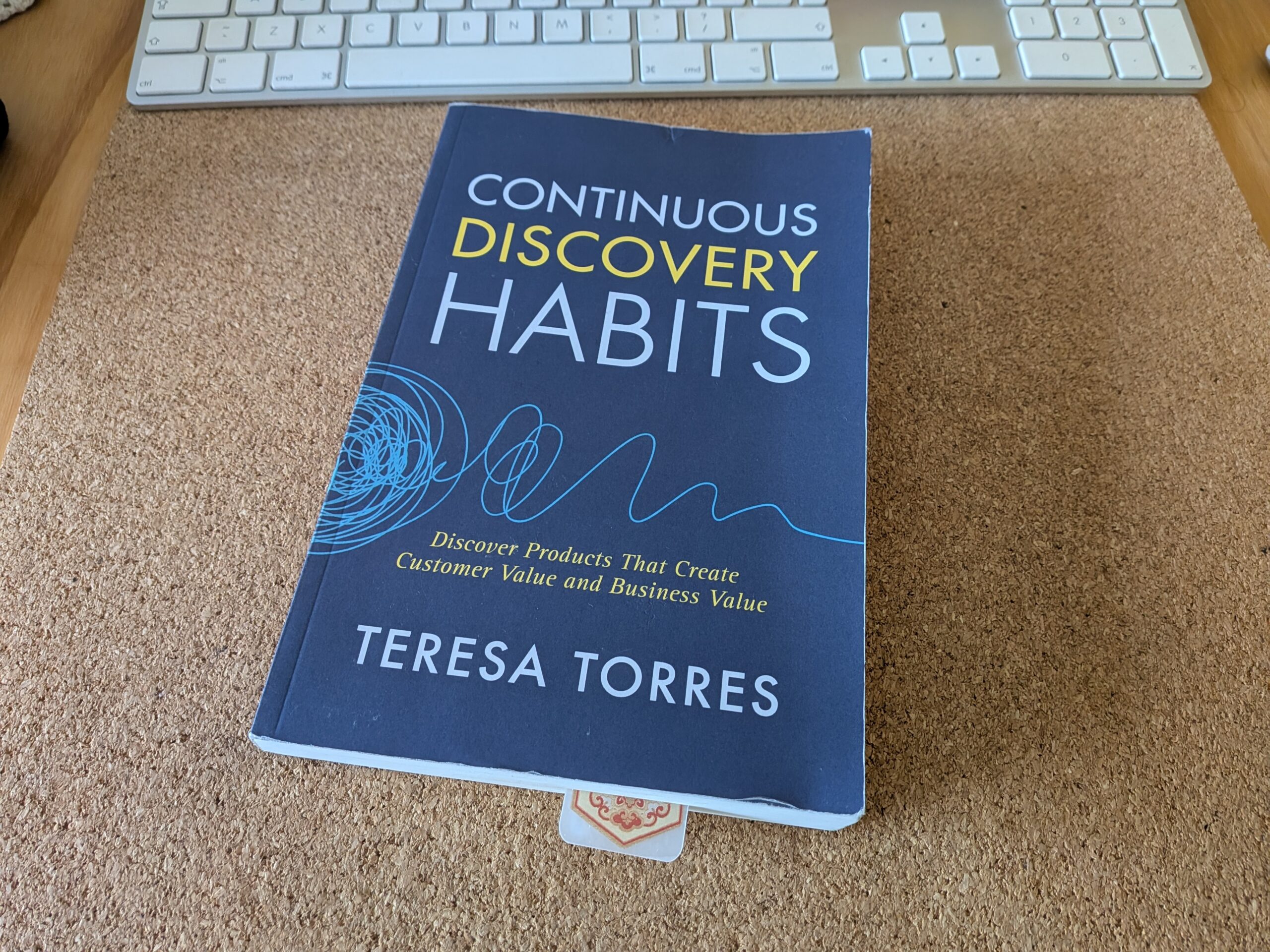
Reading Continuous Discovery Habits by Teresa Torres felt like a breath of fresh air because it addresses exactly how to break that cycle and bring business value through a collaborative, outcome-oriented approach.
As Torres suggests, the world needs better products, but building them requires more than just good intentions. It requires a mindset shift from shipping features (outputs) to achieving results (outcomes).
The Product Trio: “Los 3 Amigos”
For discovery to be truly effective, it cannot be the sole responsibility of one department. It requires a constant collaboration between:
- Product Management
- Design
- Engineering
When these “3 amigos” work together, discussions shift from “what should we build?” to “how can we solve this customer problem while creating business value?”
Moving from Outputs to Outcomes
Many organisations fall into the trap of being feature-centric. Torres argues for a shift toward being customer-centric by focusing on behaviour. This is exactly what is presented on the Outcomes over output book that I reviewed previously.
By focusing on the behaviour we want to change, we give the team the autonomy to find the best solution rather than just following a roadmap of static features.
The Opportunity Solution Tree (OST)
To visualize this strategy, Torres introduces the Opportunity Solution Tree. It’s a simple but powerful framework to ensure every experiment is tied back to a business goal. I placed the definitions in this table below, adding examples of how it would work for the Savings department of a bank.
| OST levels | Definition | Example from a bank |
| Outcome | The business metric you want to move. | Retain and increase savings balances. |
| Opportunity | Customer pain points, needs, or desires. | “I want an easy way to renew fixed-term savings accounts”. |
| Solution | Features or propositions to address the need. | One-click renewal for fixed-terms. |
| Assumption Test | Small experiments to see if the solution works. | Testing the renewal flow with 5 users. |
A key takeaway here is to break down opportunities into smaller, manageable chunks. Instead of tackling “usability” as a whole, you might tackle “ease of renewing fixed-term accounts.”
To define good opportunities to explore, Torres suggests brainstorming and idea-generation sessions, which are described in detail in a dedicated chapter.
Continuous Discovery in Practice
Discovery shouldn’t be a one-off phase at the start of a project. It should be experimental and continuous, with the trio engaging in weekly touchpoints with customers. Interviewing 5 customers every week can add clarity, steer the development of features and help correcting course quickly.
One practical tool she suggests is the Collective Journey Map. Instead of a researcher presenting a finished map, the trio draws it together from their unique perspectives. This creates a shared understanding of the problem space before any brainstorming begins.
Testing and Decisions
Finally, the book reminds us to test the consequences of our decisions. We should always compare and contrast — testing multiple solutions against each other rather than just validating a single idea.
In conclusion, Continuous Discovery is a essential reading for anyone looking to bridge the gap between research and delivery. It moves discovery out of the “lab” and into the daily workflow of the team.
Key Takeaways
- Focus on Outcomes: Define success by changes in user behaviour, not by the number of features shipped.
- Collaborate Early: Get Engineers and PMs involved in the research from day one.
- Simplify to Solve: Break large opportunities into smaller ones to make them easier to tackle.
- Keep a Pulse: Aim for at least one customer touchpoint every week to keep assumptions in check.
Reference
Torres, T. (2021). Continuous discovery habits: Discover products that create customer value and business value. Product Talk LLC.